
Climate
Mitigation
Finance
A practical roadmap for financial institutions and SMEs navigating the fast-evolving landscape of climate finance. From green instruments to blended finance structures — everything you need to mobilize capital for a low-carbon transition.

In a decisive effort to bridge the massive funding gaps threatening small and medium-sized enterprises (SMEs) across emerging markets, Green Initiative has officially launched its highly anticipated Climate Mitigation Finance Guide. Green Initiative has officially launched its landmark Climate Mitigation Finance Guide, a comprehensive, actionable framework designed to close the persistent climate funding gap facing small and medium-sized enterprises (SMEs) in emerging markets. The launch took place during a high-level international webinar, Climate Mitigation Finance & Working Paper Launch, convening senior representatives from the International Finance Corporation (IFC), the United Nations, and the Caribbean Regional Fisheries Mechanism (CRFM) to redefine the architecture of sustainable investment for developing economies. Why Climate Finance for Emerging Market SMEs Is Urgent While multinational corporations dominate global climate investment flows, SMEs form the backbone of emerging economies — yet they face severe, systemic barriers to accessing international climate capital. The newly released guide directly addresses this disparity. Opening the session, Fred Perron-Welch, Head of Climate Policy at Green Initiative, explained why the stakes have never been higher: “Global supply chains are being radically repriced based on carbon costs, driven by upcoming carbon border adjustments in the EU and UK. The critical challenge for financial institutions is moving from mere alignment commitments to actual, on-the-ground portfolio decarbonization and capital deployment.” The Climate Mitigation Finance Guide equips financial institutions with a robust, peer-reviewed framework to identify and de-risk mitigation investment opportunities across 11 key subsectors, helping institutions meet evolving regulatory expectations — including the EU Carbon Border Adjustment Mechanism (CBAM) — while deploying capital at scale. About the Climate Mitigation Finance Guide The guide was developed to support financial institutions, development banks, and impact investors in structuring bankable climate projects in emerging markets. It covers: To ensure technical precision and institutional credibility, the guide underwent rigorous peer review by experts from: UNCTAD (David José Vivas Eugui, Claudia Contreras) · UN Environment Programme (Helena Rey De Assis) · International Trade Centre (Joseph Wozniak) · Inter-American Development Bank (Tenisha Elizabeth Brown) · CAF (Nelson Larrea) · NAFIN (Jocelyn Alexia Flores González, Juan Carlos Freyre Pinto) · CRFM (Peter A. Murray, Sandra Grant, Sherron Barker, Sanya Compton) · Columbia University · SNV · Sevea Consulting · Profonanpe · Proyecta Peru · Smithsonian Institution (Francisco Dallmeier) Key Insights from the Webinar The launch panel moved beyond traditional presentations to foster an interactive, cross-sector dialogue on restructuring global climate finance. Five themes defined the conversation: 1. The Energy Imperative: “Power Shoring” and Green Industry Jorge Arbache highlighted that energy accounts for 50–60% of projected decarbonization budgets. A critical new dynamic — bringing industrial energy consumption directly to green production sites — opens major investment opportunities in green hydrogen and green steel for Latin America. However, Arbache warned that protectionist policies in the EU, US, and Japan continue to block emerging markets from freely exporting these green products, undermining the global energy transition. 2. Natural Capital: The 30-to-1 Deficit Ivo Mulder (UNEP) presented a stark reality: 50% of the global economy is highly dependent on nature, yet the financial system draws down natural capital at a ratio of 30 to 1. Mulder showcased how catalytic facilities — including the Restoration Seed Capital Facility and the Agri-Free Fund — use blended finance and partial credit guarantees to mobilize hundreds of millions of dollars for sustainable agriculture and SMEs. 3. Inclusive Environmental Compliance: Smallholders Must Not Be Left Behind Michael Spoor argued that compliance frameworks designed exclusively for large operators inadvertently exclude smallholder farmers and micro-enterprises. His solution: shared infrastructure and traceability systems that make restoring degraded land more economically rational than deforestation cycles — creating investment return profiles that private capital can actually follow. 4. A Seven-Point Blueprint for Blue Economy Finance Marc Williams (CRFM), representing 17 Caribbean and Atlantic member states, outlined the systematic exclusion of fisheries from global climate finance due to perceived data gaps and structural complexity. Williams presented seven decisive actions to transition from fragmented pilot programs to scalable investment — spanning digital catch reporting, blue carbon credit markets, and integrated coastal climate risk tools. 5. Development Banks Must Shift from Passive to Proactive The panel reached a clear consensus on institutional reform. Emilio Lebre La Rovere argued that development banks must abandon passive roles and build proactive capacity in the Global South to structure bankable projects, citing Brazil’s EcoInvest mechanism as a replicable domestic model. Stephania Mageste highlighted the opportunity to link NDC commitments directly to FDI incentives to ensure incoming capital empowers local SMEs rather than bypassing them. Marcos Vaena, Senior Strategist at the IFC, reinforced the need for patient, upstream engagement: “Interventions must be sector-specific. Success requires radical collective action and deep partnerships between those who hold the technical capacity, the capital, and the scientific knowledge.” The IFC’s upstream approach — engaging with opportunities 3 to 5 years before they are investment-ready — exemplifies the long-horizon thinking the guide is designed to enable. Watch the Climate Mitigation Finance Webinar Recap Download the Climate Mitigation Finance Guide Financial institutions, development banks, policymakers, and sustainability practitioners can access the full Climate Mitigation Finance Guide and accompanying working paper at the dedicated GI International platform. Frequently Asked Questions: Climate Mitigation Finance Guide What is the Climate Mitigation Finance Guide launched by Green Initiative? The Climate Mitigation Finance Guide is a comprehensive, actionable framework designed to bridge the structural investment gap between global financial institutions and small to medium-sized enterprises (SMEs) in emerging markets. Officially unveiled during the international working paper launch, it provides institutional lenders with precise methodologies to identify, de-risk, and deploy capital across 11 key low-carbon subsectors. How does GI International support SME green financing in Brazil? Operating exclusively as GI International within Brazil, our institution provides hands-on capacity building and strategic advisory services. GI International helps Brazilian commercial banks, sustainable operators, and development agencies utilize innovative financial devices—such as Brazil’s successful EcoInvest mechanism, exchange rate hedging, and sovereign guarantees—to successfully mobilize local and international capital for climate-resilient SME projects. What are the main barriers preventing SMEs

Why trade and industry climate rules are creating the biggest opportunity in finance Nearly every significant analysis of climate regulation over the past five years has organized itself around the same central question: how much will this cost? The financial sector has followed suit. Climate regulation enters boardrooms primarily as a risk management topic — a compliance cost to be absorbed, a liability to be measured and disclosed. That framing is not wrong. But it is profoundly incomplete. And that incompleteness carries a growing price. What the risk-and-cost narrative systematically ignores is the other side of the ledger: the demand side. Climate regulation is not only constraining the existing economy. It is actively constructing the architecture of a new one. At the center of that new architecture sits a financing gap of historic proportions that no government, no development bank, and no multilateral institution can close alone. Only financial institutions, operating at scale and mobilizing commercial capital, have the capacity to fill it. The question is no longer whether this market exists. It does — and it is growing faster than the capacity of institutions to serve it. To understand the opportunity, one must read the regulations not as compliance documents but as demand-creation mechanisms. The European Union’s Carbon Border Adjustment Mechanism — CBAM — is the most consequential trade instrument of the climate era. By applying a carbon price to imports of steel, cement, aluminum, fertilizers and hydrogen, it achieves something no voluntary framework has ever managed: it makes the cost of failing to decarbonize visible, quantifiable and unavoidable for exporters in any country that trades with Europe. The United Kingdom follows the same path, with its own CBAM scheduled to enter into force in 2027. The competitive logic is direct: decarbonize, or lose access to the world’s largest trading bloc. The US Inflation Reduction Act operates through a different mechanism but produces a structurally similar effect. By directing $370 billion toward clean manufacturing incentives — renewables, electric vehicles, green hydrogen and low-carbon industrial processes — it reprices the economics of production across North America and forces global supply chains to recalibrate. China’s National Emissions Trading System — today the world’s largest carbon market by volume, steadily expanding beyond the power sector — embeds carbon costs into the productive economy of the world’s largest exporter. The carbon embedded in exported goods is ceasing to be an externality and becoming a measurable competitive variable. Together, these mechanisms are achieving what decades of voluntary climate commitments could not: creating structural, policy-backed, regulatory demand for capital to finance the decarbonization transition. Not voluntary demand. Not aspirational demand. Regulatory demand — the kind where the alternative to investment is market exclusion. That is a qualitatively different order of financing opportunity from anything the ESG era produced. Not voluntary demand. Not aspirational demand. Regulatory demand — the kind where the alternative to investment is market exclusion. One of the most visible signals of this transformation is the phenomenon economists have termed powershoring: the strategic relocation of energy-intensive industrial production toward regions with abundant, low-cost renewable energy. The logic is objective. If CBAM makes it commercially unviable to export high-carbon steel or cement to Europe, the rational corporate response is not simply to pay the tariff — it is to move production to countries where decarbonization can be achieved at lower cost and higher speed. North and West Africa, Latin America, the Persian Gulf and Southeast Asia are becoming the new industrial frontiers of the low-carbon economy. For financial institutions with the capacity to originate climate transition finance in these emerging geographies, powershoring represents a first-mover market opportunity of significant scale. For those without that capacity, it represents a client base that will build its financial relationships elsewhere. The capital required to execute that transition is substantial — and it is, by its very nature, climate transition finance.Latin America, beyond being a growing destination for transition investment driven by powershoring, is actively constructing its own domestic carbon pricing architecture. Brazil is the most eloquent case of that trajectory. With the enactment of Law 15,042 of 2024, the country established the legal framework for the Brazilian Greenhouse Gas Emissions Trading System — the SBCE — becoming the first major developing country to legislate a comprehensive regulated carbon market. The system provides for an initial monitoring and reporting phase, followed by mandatory compliance phases with sectoral emissions caps, offset mechanisms and articulation with existing voluntary markets. This is a sovereign decision with its own economic logic — and with direct implications for the competitiveness of Brazilian supply chains in international trade. The technical element that makes that system functional is being finalized at the Ministry of Finance: a regulation proposing mandatory emissions reporting for 17 sectors of the Brazilian economy, including energy, steel, cement, pulp and paper, and petrochemicals, among others. That sectoral reporting is the data infrastructure without which no carbon market can operate with integrity — without verified inventories by company and by sector, there is no credible basis for setting caps, allocating emissions allowances or monitoring compliance in an auditable way. The Ministry of Finance regulation and the SBCE are therefore two complementary instruments of the same architecture: one creates the regulatory demand for emissions data; the other converts that data into price signals that orient investment decisions. Brazil is not importing an external model. It is integrating itself, progressively and with structure, into a global carbon pricing architecture that is already reshaping trade and capital flows across every major economy in the world. Brazil is not importing an external model. It is integrating itself, progressively and with structure, into a global architecture that is already reshaping trade and capital flows across every major economy in the world. In 2021, the Glasgow Financial Alliance for Net Zero — GFANZ — was launched with considerable fanfare. More than 550 financial institutions, representing over $130 trillion in assets under management, committed to net-zero portfolios by 2050. The commitment was serious. The ambition was genuine. The

Financial institutions (FIs) are facing a structural bottleneck in their pursuit of net-zero portfolios. While banks and asset managers have earmarked billions for sustainable finance, deploying that capital to Small and Medium-sized Enterprises (SMEs) remains exceedingly difficult. The friction rarely stems from a lack of willing borrowers; rather, it stems from a profound crisis in data quality. When evaluating a Sustainability-Linked Loan (SLL) or a green credit facility, risk managers require investment-grade SME emissions data finance metrics. Yet, when the average SME submits their carbon footprint, credit officers are usually met with incomplete spreadsheets, unverified estimates, and boundary inconsistencies. If a lender bases their financing rates or portfolio decarbonization claims on this flawed data, they expose the institution to severe greenwashing liabilities and mispriced risk. To bridge the gap between capital supply and SME decarbonization, financial institutions must understand exactly why this data fails and how to systematically solve the problem. For a complete overview of evaluating SME readiness, visit our hub guide: GHG Inventory Development for SMEs: A Financial Institution’s Guide to Climate-Ready Portfolios. The Problem: The “Investment-Grade” Data Gap In traditional credit risk, financial institutions rely on audited financial statements governed by GAAP or IFRS standards. In climate finance, the equivalent standard is the GHG Protocol and ISO 14064. However, while 100% of SMEs have an accountant to manage their financial books, fewer than 5% have the internal capacity to manage their carbon books. This results in a massive rejection rate for climate finance applications. SMEs either fail to provide the required Measurement, Reporting, and Verification (MRV) documentation, or the documentation they do provide is deemed inadmissible by the bank’s credit committee. Consequently, vital capital gets trapped at the top of the financial system, and lenders fall behind on their own Scope 3 (Category 15) financed emissions targets. Why This Happens: The Root Causes of Data Failure When an SME’s GHG inventory is rejected by a lender, the failure typically traces back to one of three root causes: 1. Spend-Based Estimations Over Primary Data Many SMEs use basic online carbon calculators that rely entirely on “spend-based” emission factors. For example, if an SME spends $10,000 on fuel, the calculator estimates emissions based on a generic industry average. While useful for high-level screening, spend-based data is unacceptable for setting baseline targets in a financing agreement because it cannot reflect operational improvements. (If the SME buys more expensive, highly efficient fuel, their spend goes up, which perversely makes their calculated emissions look worse). 2. Organizational Boundary Errors SMEs frequently fail to properly define their operational control. As we discussed in our guide to scope boundaries Understanding Scope 1, 2, and 3 Emissions: A Financial Institution’s Guide, SMEs often accidentally omit leased assets, outsourced logistics, or manufacturing subsidiaries from their calculations. A fundamentally flawed boundary renders the entire inventory invalid. 3. The Lack of Third-Party Verification An internal spreadsheet compiled by an SME’s operations manager carries high uncertainty. Without third-party verification to guarantee adherence to ISO 14064 principles (Relevance, Completeness, Consistency, Transparency, Accuracy), the data remains too risky for a financial institution to use for regulatory reporting or green bond issuance. Solution Options: How FIs Currently Respond When faced with poor climate finance data gaps, financial institutions typically take one of three approaches. Approach A: The Exclusionary Approach (High Opportunity Cost) Many FIs simply reject loan applications that lack verified ISO 14064 data. Approach B: The Proxy Approach (High Risk) Some FIs try to estimate the SME’s emissions themselves using sectoral averages or proxy data to “fill in the blanks.” Approach C: The Technical Assistance Approach (The Optimal Path) Forward-thinking FIs don’t expect SMEs to be carbon accounting experts. Instead, they provide Technical Assistance (TA)—either funded by the bank, blended finance facilities, or multilateral development banks—to help the SME build an investment-grade inventory before the loan is finalized. Are your climate finance products stalled by poor borrower data? Contact Green Initiative for a Solution Assessment to see how integrating our technical assistance frameworks can unblock your lending pipeline. Recommended Solution: Implementing a Climate-Mitigation Finance Framework (CMFF) To solve the SME MRV requirements challenge, financial institutions must shift from being passive consumers of data to active facilitators of data quality. Implementing a structured Climate-Mitigation Finance Framework (CMFF) is the most effective way to achieve this. Here is the step-by-step implementation guidance for FIs: Step 1: Assess the Climate Maturity Level (CML) Stop asking every SME for a full Scope 1, 2, and 3 inventory on day one. Implement a pre-screening tool to assess their maturity. If an SME is at “Level 1” (Basic Awareness), the immediate requirement is not a loan, but a capacity-building grant or TA facility. Step 2: Standardize the Tech Stack Do not accept fragmented PDF reports. Require or provide access to a standardized digital MRV platform (such as GREENIA) that forces the SME to input primary data (e.g., uploading utility bills and fuel receipts). This immediately eliminates the “spend-based estimation” error and standardizes data formatting for your credit officers. Step 3: Integrate Verification into the Loan Structure Make third-party verification a condition precedent for accessing preferential interest rates. If an SME wants the 50-basis-point reduction offered by your SLL, they must use a fraction of their savings to pay for ISO 14064-3 verification. This creates a self-funding mechanism for investment-grade carbon data. Step 4: Shift Focus to the Baseline Ensure your credit officers are trained to ruthlessly scrutinize the baseline year. The baseline is the foundation of the credit agreement. The FI must ensure it is representative, boundary-complete, and built on primary data. Measuring Success: Tracking Portfolio Readiness How does a financial institution know if its approach to SME data is working? Track these three leading indicators: Conclusion: Data Quality is a Collaborative Effort The failure of SME emissions data finance metrics is not an SME problem; it is a systemic design flaw in how the financial sector approaches the middle market. Financial institutions cannot afford to wait for SMEs to independently master carbon accounting. By taking

Clean mobility, tourism, and investment are behind the project seeking to transform the urban coastline of the Peruvian capital. For decades, Lima maintained a distant relationship with the ocean that defines its geography. The Peruvian capital extends over cliffs up to 80 meters high facing the Pacific, creating a physical, cultural, and urban separation between the city and its beaches. Despite having one of the most extensive urban coastlines in Latin America, accessing the sea in districts like Miraflores, Barranco, San Isidro, or San Miguel remains a logistical challenge for much of the population. For millions of Lima residents, the beach represents an occasional destination reached primarily by car, involving congestion, limited parking, and demanding pedestrian access via steep, high-gradient stairs. That scenario is beginning to change. In the coming weeks, Miraflores will put into operation the “Vaivén Miraflores,” (@vaiventeleferico) the first urban tourist cable car in Metropolitan Lima. This clean-energy electric mobility system will connect the district’s boardwalk with Redondo Beach in just three minutes. The project involves an investment of nearly US$10 million and utilizes technology from the Austrian company Doppelmayr, a global leader in cable transport systems. The relevance of the project goes far beyond mobility between two points separated by 310 meters. The Vaivén represents a new stage in the relationship between Lima and its coastline and strengthens the consolidation of Miraflores as the main urban tourist destination of the Peruvian capital. The district concentrates a significant portion of Lima’s hotel, gastronomic, cultural, and recreational offerings, alongside a permanent dynamic of private investment linked to tourism and services. Improved accessibility to the Costa Verde significantly expands the economic, social, and recreational potential of the coastal edge, breathing life into this underutilized space. Clean Mobility and Climate Commitment The project also introduces a dimension that is increasingly relevant in global urban and tourist development: the decarbonization of mobility. In a city where much of the beach access depends on private cars, the Vaivén Miraflores incorporates a low-emission electric system that will contribute directly to reducing the carbon footprint associated with traveling to the coast. The initiative aligns with Miraflores’ objectives as a member of the international Surf Cities network, a platform that promotes coastal cities linked to sports, sustainability, and the protection of marine ecosystems. The comprehensive emissions management of the project and its Carbon Neutral climate certification are the responsibility of Green Initiative, an organization internationally recognized for its leadership in climate certifications applied to the tourism sector and sustainable destinations. The integration of urban infrastructure, clean mobility, and climate management positions the Vaivén Miraflores among the most innovative urban tourism projects in Latin America. The integration of urban infrastructure, clean mobility, and climate management positions the Vaivén Miraflores among the most innovative urban tourism projects in Latin America. A Catalyst for Urban Transformation International experience shows that this type of infrastructure often becomes an urban catalyst. Cities like Medellín, La Paz, and Mexico City have incorporated cable transport systems that boosted real estate appreciation, territorial integration, urban regeneration, and new economic dynamics around the connected corridors. In coastal cities, where topography has historically limited access to the sea, the impact can be even more transformative. In the case of Miraflores, the Vaivén articulates tourism, quality of life, and sustainable mobility in a single infrastructure. The system will facilitate access for residents, tourists, cyclists, and surfers to the Costa Verde through accessible cabins equipped for bicycles and surfboards. The increase in pedestrian and recreational connectivity can progressively transform the economic dynamics of the coast, expanding opportunities for: The revitalization of the coastal edge also strengthens incentives for new public and private investments in urban spaces, security, landscaping, and tourist equipment. This is especially relevant for Lima, where several coastal districts concentrate hundreds of thousands of inhabitants and a growing urban economy. The Lima coast possesses extraordinary comparative advantages that remained partially disconnected from the city’s daily life for decades. The Vaivén Miraflores may mark the beginning of a broader transformation: a new urban vision where the coastline stops being primarily a vehicular corridor and becomes an integrated space for well-being, tourism, sports, and economic development. Perhaps therein lies the true scope of the project. More than just connecting the boardwalk to the beach, the Vaivén Miraflores has the potential to transform how Lima relates to its coast, finally integrating the ocean into the economic, social, and urban dynamics of a city built facing the Pacific. Related Articles

On May 29, 2024, the European Union adopted the Green Claims Directive—the world’s most comprehensive regulation on environmental claims. Starting September 27, 2026, this directive will reshape how companies communicate about their climate and environmental performance. Yet perhaps its most substantial contribution to the global fight against greenwashing lies beyond communication itself. By demanding scientific substantiation and independent verification, the directive creates a powerful catalytic effect on how organizations actually manage climate and environmental aspects within their internal processes and business models. Rigorous measurement, transparent reporting, and credible verification require companies to build genuine institutional capacity—embedding climate and nature-positive practices into operations, governance, and strategic planning. In this way, the directive becomes far more than a communication standard. It becomes a driver of authentic, long-term business transformation toward more responsible and resilient models of growth. Why Now? The Greenwashing Crisis For years, companies have made sweeping environmental claims with little to back them up. “Eco-friendly,” “sustainable,” “carbon neutral”—these terms became marketing tools rather than meaningful commitments. Consumers were misled. Investors couldn’t trust corporate climate disclosures. And organizations genuinely committed to environmental action found themselves competing on unequal terms against those simply telling a better story. The scale of the problem demanded a response. Studies show that over 50 percent of environmental claims lack adequate scientific backing. Companies making unsubstantiated claims gained unfair competitive advantage, while those investing seriously in real climate action struggled to differentiate themselves in crowded markets. The EU Green Claims Directive exists to end this dynamic—rewarding authentic environmental leadership and holding greenwashing accountable. What Changes on September 27, 2026 Starting that date, environmental claims must meet three non-negotiable requirements: These three requirements together signal something important: compliance is a management challenge as much as a communication challenge. Organizations that approach the directive as a reporting exercise will struggle. Those that embed its principles into governance, operations, and business strategy will thrive. Prohibited Claims: What Companies Can No Longer Say The directive explicitly prohibits claims that cannot meet these standards. Understanding these prohibitions is essential for any organization currently making environmental statements: Restrictions on “Carbon Neutral” and “Climate Positive” Addressing Vague and Partial Claims Why This Matters: The Competitive Opportunity The Green Claims Directive is a compliance requirement—but organizations that understand its deeper logic will recognize it as a market opportunity of significant proportions. Companies that move now—establishing rigorous environmental measurement, embedding climate and nature-positive governance into their operations, and securing independent verification before September 2026—gain first-mover advantage in markets increasingly demanding authenticity. Early adopters gain market trust, investor confidence, and regulatory resilience simultaneously. Organizations that build genuine internal capacity for environmental management emerge as the trusted leaders in their sectors. The Global Ripple Effect The EU is establishing the global standard, but it will not remain alone for long. Similar frameworks are already emerging in the United Kingdom, Canada, and other major economies. Organizations that build robust, verified environmental programs now will be positioned for global compliance rather than scrambling market by market as regulations tighten worldwide. What This Means for Your Organization If your organization makes environmental claims, the time to act is now. Start by auditing your current claims honestly: Which are scientifically substantiated? Which have been independently verified? Then build the foundation: * Rigorous baseline measurement across all scopes. The most important investment is organizational. Build the internal governance structures and technical capacities that make climate and nature-positive action a permanent part of how your organization operates. Green Initiative: A Partner for Authentic Transformation At Green Initiative, we support companies and destinations in building the internal institutional capacity to measure, manage, and verify their environmental impact rigorously. We help organizations understand that decarbonization and nature restoration are investments that strengthen long-term resilience and open access to sustainability-driven markets. Through science-based frameworks and independent certification, we walk alongside organizations on this journey. The standard is rising. The opportunity belongs to those who rise with it. This article was prepared by Yves Hemelryck from the Green Initiative Team. Related Reading

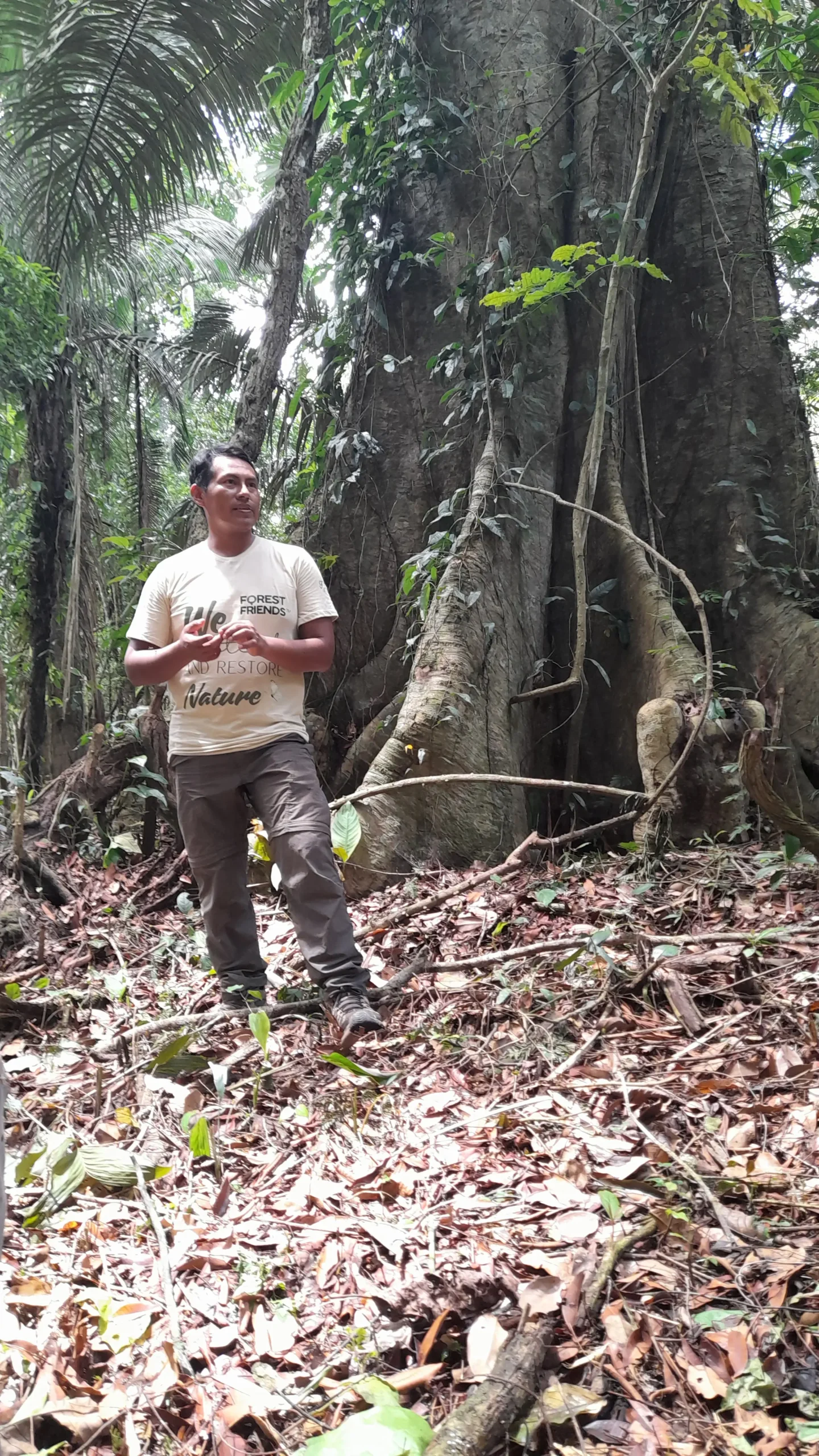
The Historic Sanctuary of Machu Picchu is universally recognized as an architectural masterpiece and a symbol of the Inca civilization. However, beyond its profound cultural and historical significance, it is also a highly valuable and fragile ecosystem. Nestled at the convergence of the Andes and the Amazon basin, its cloud forests harbor exceptional biodiversity and play a critical role in regional water regulation. Today, this iconic landscape faces mounting environmental pressures, including forest degradation, the escalating impacts of climate change, biodiversity loss, and an increased risk of wildfires. Protecting Machu Picchu requires more than preserving its stone terraces; it requires the active restoration and defense of its surrounding natural habitats. Recognizing this imperative, Forest Friends (a Green Initiative program) and the National Service of Natural Protected Areas by the State (SERNANP) have signed a formal agreement to support the agenda behind the “One Million Trees for Machu Picchu” initiative. This collaboration represents a vital convergence of public sector conservation mandates and private sector technical expertise, designed to ensure the long-term conservation and resilience of one of the world’s most significant heritage sites. Beyond Planting: The “One Million Trees” Initiative The “One Million Trees for Machu Picchu” initiative is a landscape-scale conservation effort aimed at revitalizing the degraded areas within and surrounding the Historic Sanctuary. However, to view this solely as a tree-planting campaign is to misunderstand its scope. The initiative is a comprehensive ecological intervention designed to: Strengthening the Technical Agenda: The Role of Forest Friends A restoration project of this magnitude requires rigorous scientific planning and meticulous execution. Forest Friends, drawing on Green Initiative’s extensive expertise in climate advisory and environmental measurement, is supporting SERNANP in the initiative’s technical agenda. The collaboration focuses on integrating advanced restoration monitoring, strategic planning, and alignment with international best practices. By bringing robust technical methodologies to the forefront, Forest Friends helps the initiative align with the principles of the UN Decade on Ecosystem Restoration and other recognized global standards. This collaboration represents a scaling up of the experience we have built through our work with organizations in the tourism and travel sector, including CEPA Study Abroad, Tulu Travel, Swetours, KUODA Travel, WorldXChange, as well as other key partners such as MAPFRE, Mediterranean Shipping Company, and adidas. A Credible Opportunity for Corporate Contribution The preservation of global heritage sites is a shared responsibility. Through this collaboration, Forest Friends serves as a vital bridge, connecting companies and organizations around the world with high-quality restoration opportunities. For the private sector, supporting the “One Million Trees for Machu Picchu” initiative offers a unique proposition. It allows organizations to participate in a project that is not only emotionally resonant and rich in storytelling value, but also technically rigorous, validated, and measurable. By anchoring corporate contributions to a scientifically monitored framework, Forest Friends ensures that investments translate into tangible, verifiable environmental outcomes, safeguarding the reputations of supporting partners. Partner in the Restoration of a Global Icon and become a Machu Picchu Forest Friends Accelerator – Join the Forest Friends & SERNANP alliance. We offer companies a scientifically rigorous, measurable, and transparent way to support the “One Million Trees for Machu Picchu” initiative. The Imperative of Transparent Claims in a Regulated Landscape The necessity for such rigorous, technically backed restoration frameworks has never been more urgent. In today’s corporate landscape—particularly within European markets and other highly regulated jurisdictions—the scrutiny surrounding corporate sustainability claims is intensifying rapidly. With the introduction of regulations such as the EU Green Claims Directive and evolving global ESG disclosure expectations, the era of broad, unsubstantiated environmental messaging has ended. Companies are now required to back their environmental investments with empirical data, transparent monitoring, and standardized reporting. The Forest Friends and SERNANP collaboration is fundamentally designed to meet these modern compliance demands. It aligns not only with international restoration standards but also with the highest best practices for transparency and impact disclosure. Organizations that support this initiative are equipped to make credible, evidence-based claims linked to verifiable restoration outcomes. Ultimately, this partnership demonstrates that the future of environmental action lies at the intersection of ecological integrity and corporate accountability. By supporting structured, monitored, and internationally aligned restoration in Machu Picchu, forward-thinking organizations can protect a global treasure while confidently navigating the new standard of transparent, responsible sustainability reporting. This article was written by Marc Tristant from the GI International Team. Related Reading

Every Certificate Tells a Story.
The QR Code Proves It.
Green Initiative certificates are accompanied by a QR code that transforms a seal of recognition into a living record of verified climate performance.
- Complete carbon footprint baseline and year-by-year decarbonization results
- Cumulative performance achieved over time and forward-looking climate goals
- Direct access to the Transparency Performance Platform (TPP)—Green Initiative's independent system providing comprehensive, verified data on every certified entity





Join a global network of
leaders driving the regenerative future.
Hola